
Sole Product Designer
7 months
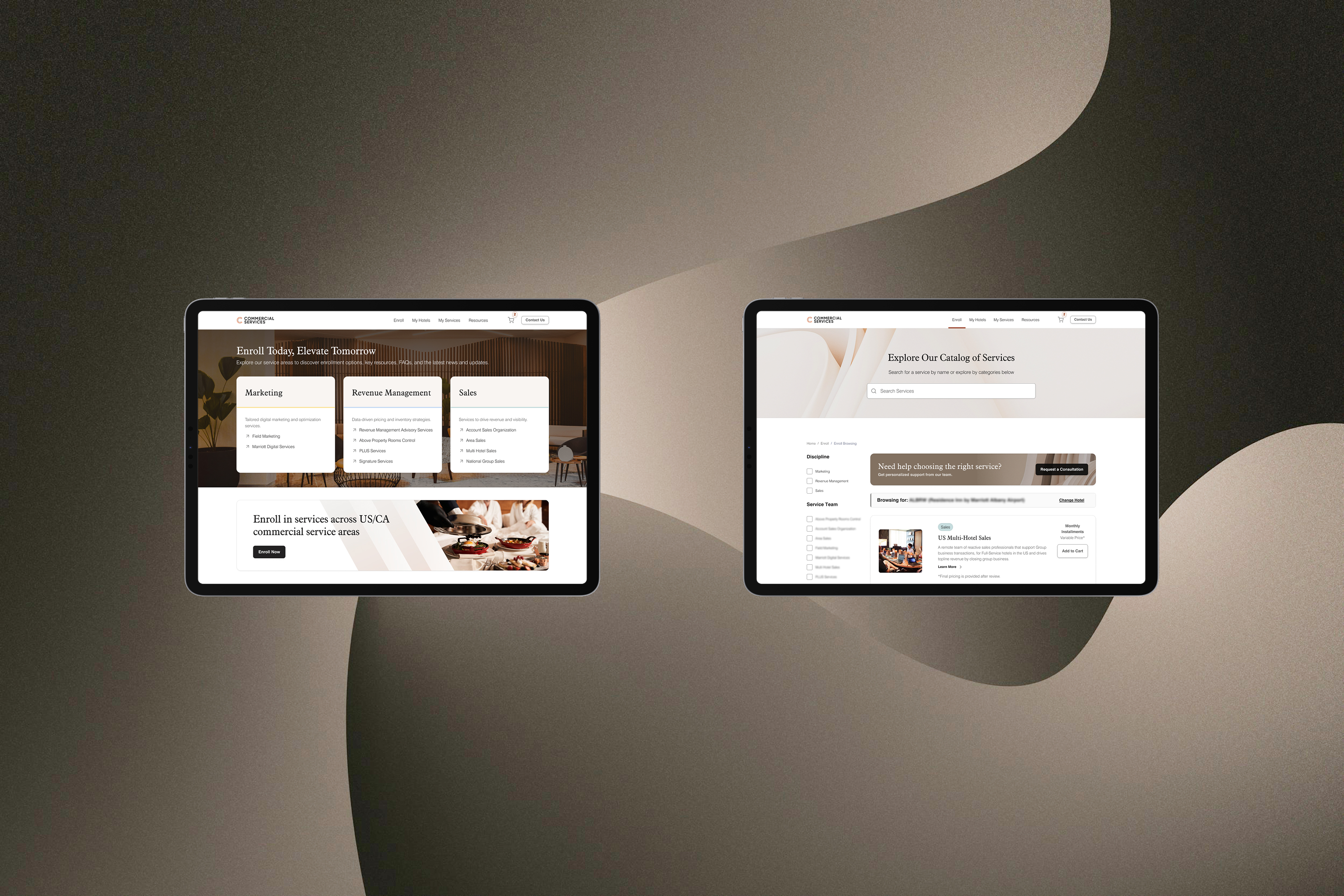
A global hospitality company was managing critical commercial services across 3 departments and 10 teams with no shared infrastructure. Workflows were fragmented, hotels could not easily find or enroll in available services, and teams lacked a consistent way to track execution or report performance.
I led the end-to-end design of a platform that turned that fragmented system into a scalable service model for U.S. and Canada hotels. The framework unified discovery, enrollment, execution, and reporting while giving departments enough control to manage their own programs. It was built as a repeatable foundation that can expand across 4 additional global regions.
The organization had a services problem disguised as a coordination problem.
On the surface, it looked like departments weren't communicating well. But the deeper issue was structural: there was no shared foundation. Services lived in silos. Enrollment paths were inconsistent. Reporting meant something different depending on who you asked.
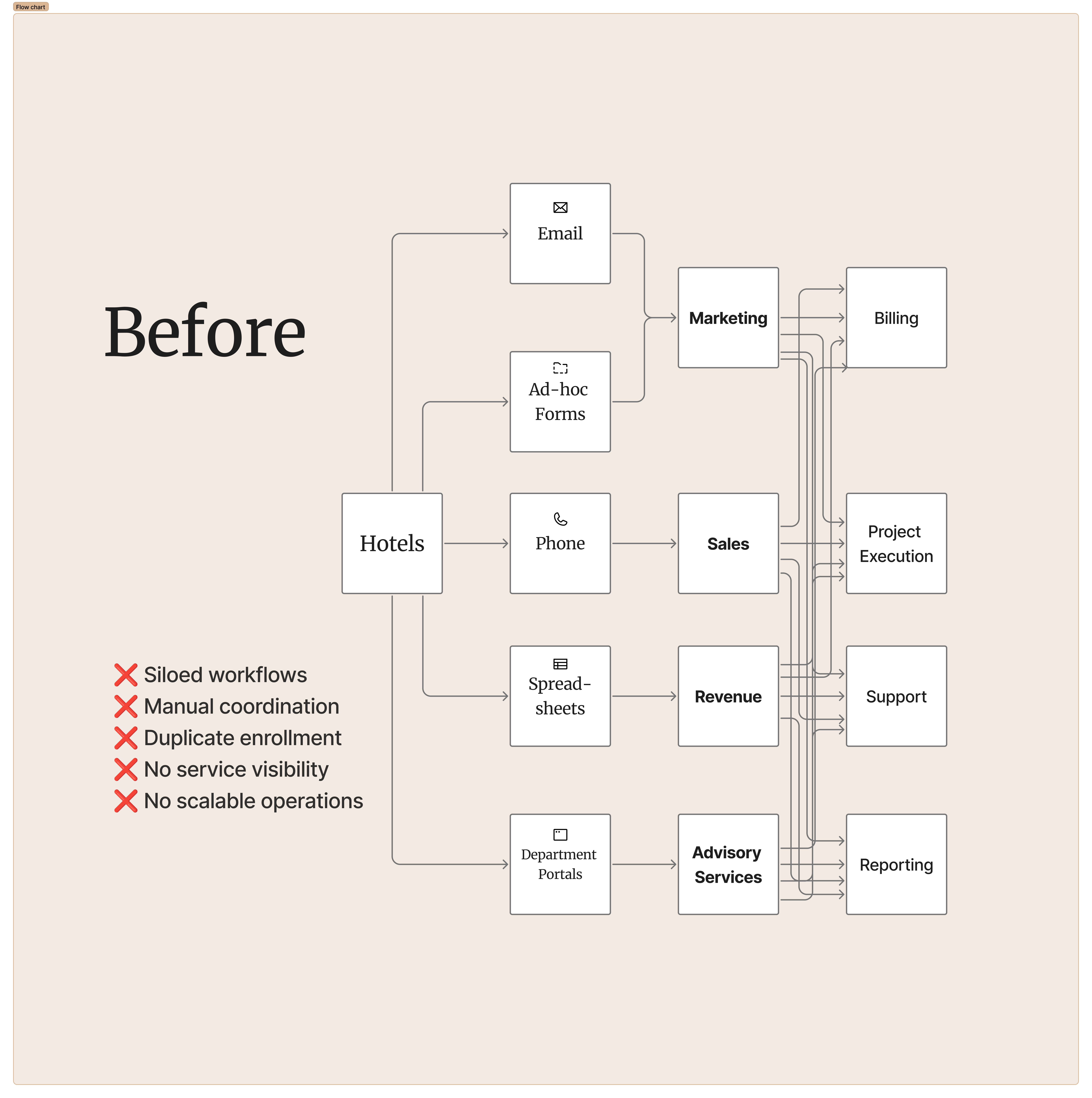
For hotels, this created real friction:
For the organization, the cost was compounding:
I owned this project from strategy through implementation.
Translated business goals into product architecture, defining user journeys and system logic, and designing every screen from wireframes to high-fidelity UI in Figma. I built interactive prototypes for stakeholder alignment, partnered with engineers throughout development, and supported Salesforce configuration to preserve UX integrity in the final build.
This was previously a developer-driven process. I introduced a design-led approach and held that standard through launch.
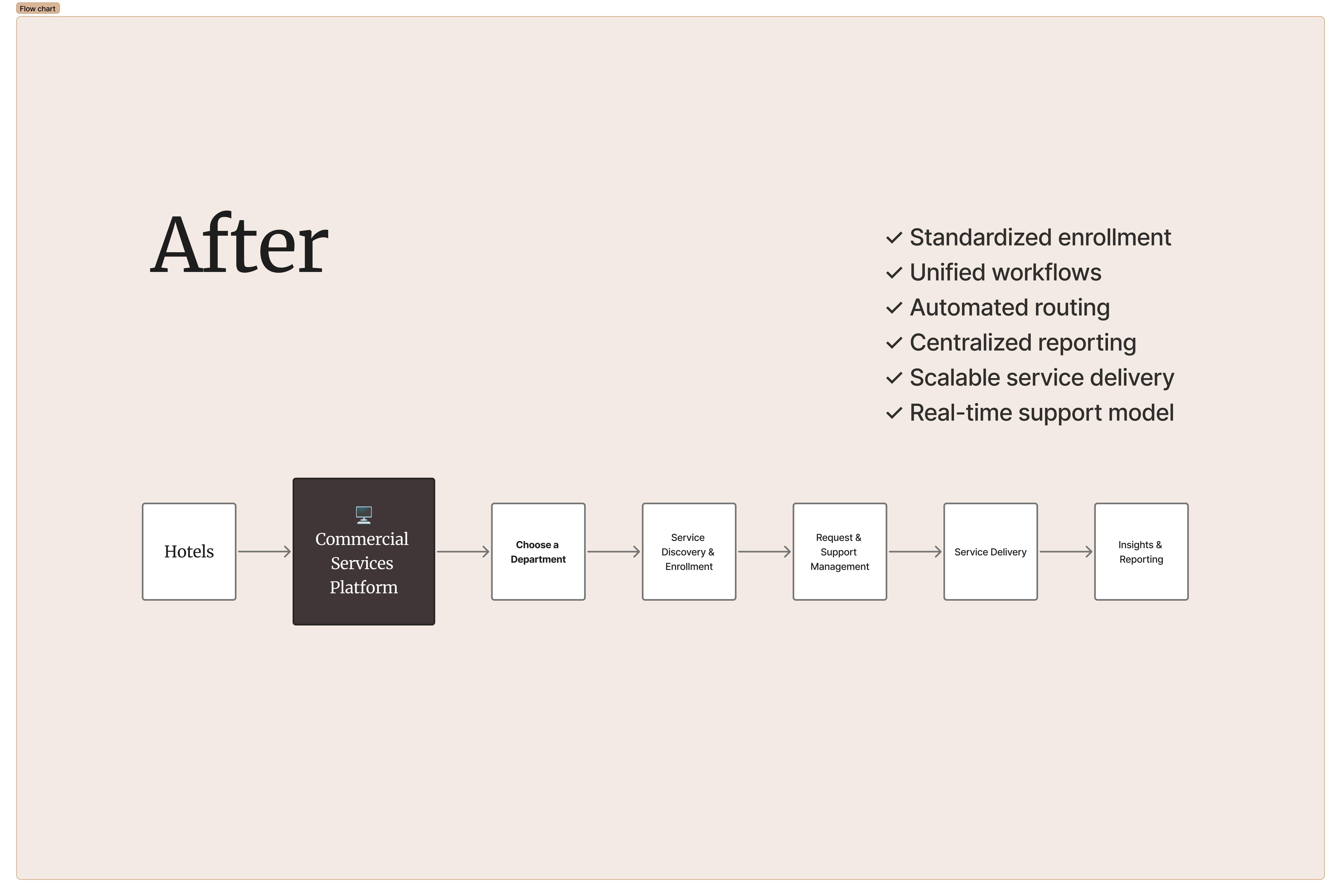
The experience is architected around the hotel's journey: discovery, enrollment, support, performance, rather than around internal department ownership. This required significant cross-functional alignment to standardize terminology and workflow structures, but it's what made the platform scalable. Departments configure their services within a shared framework. Hotels see one coherent experience.
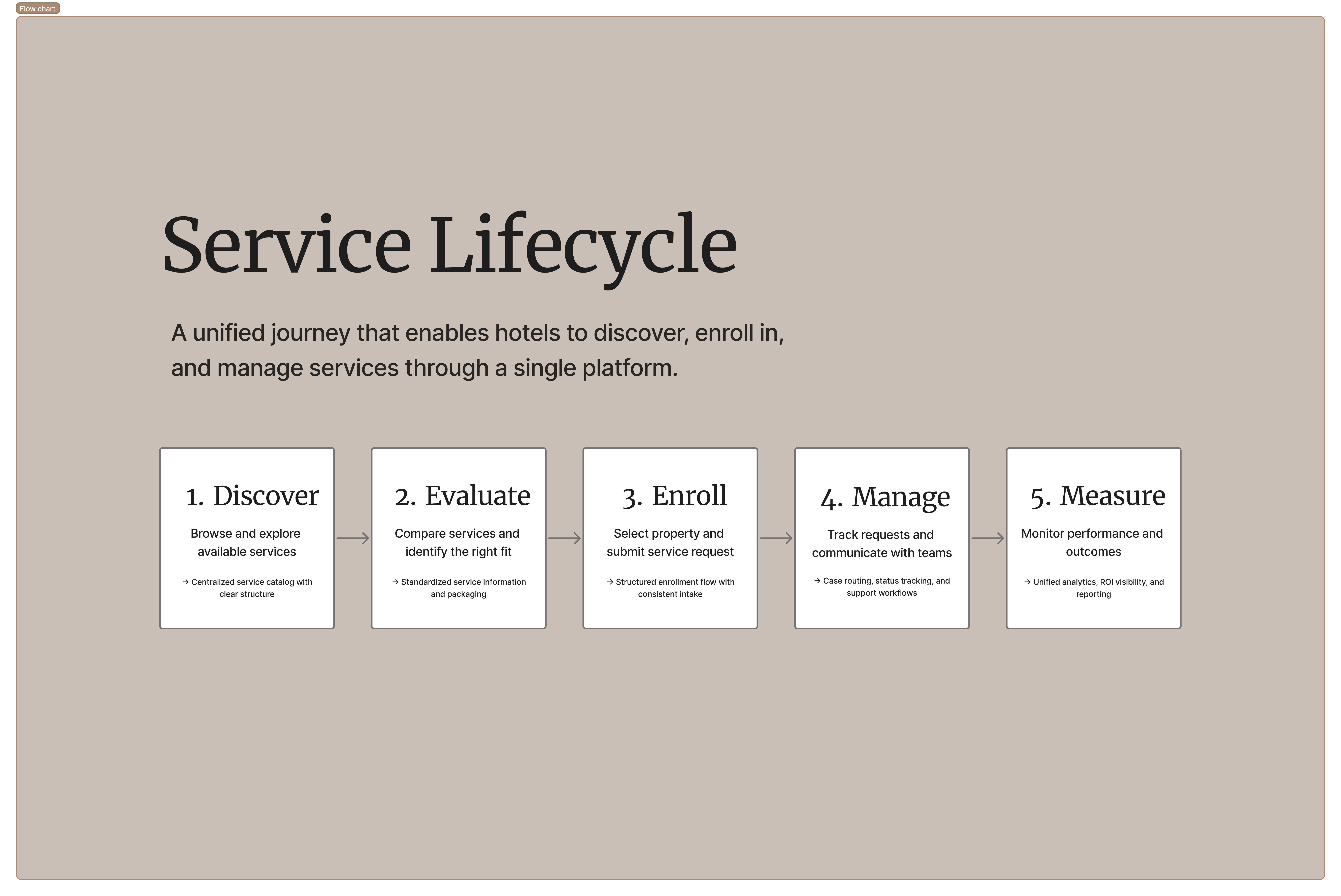
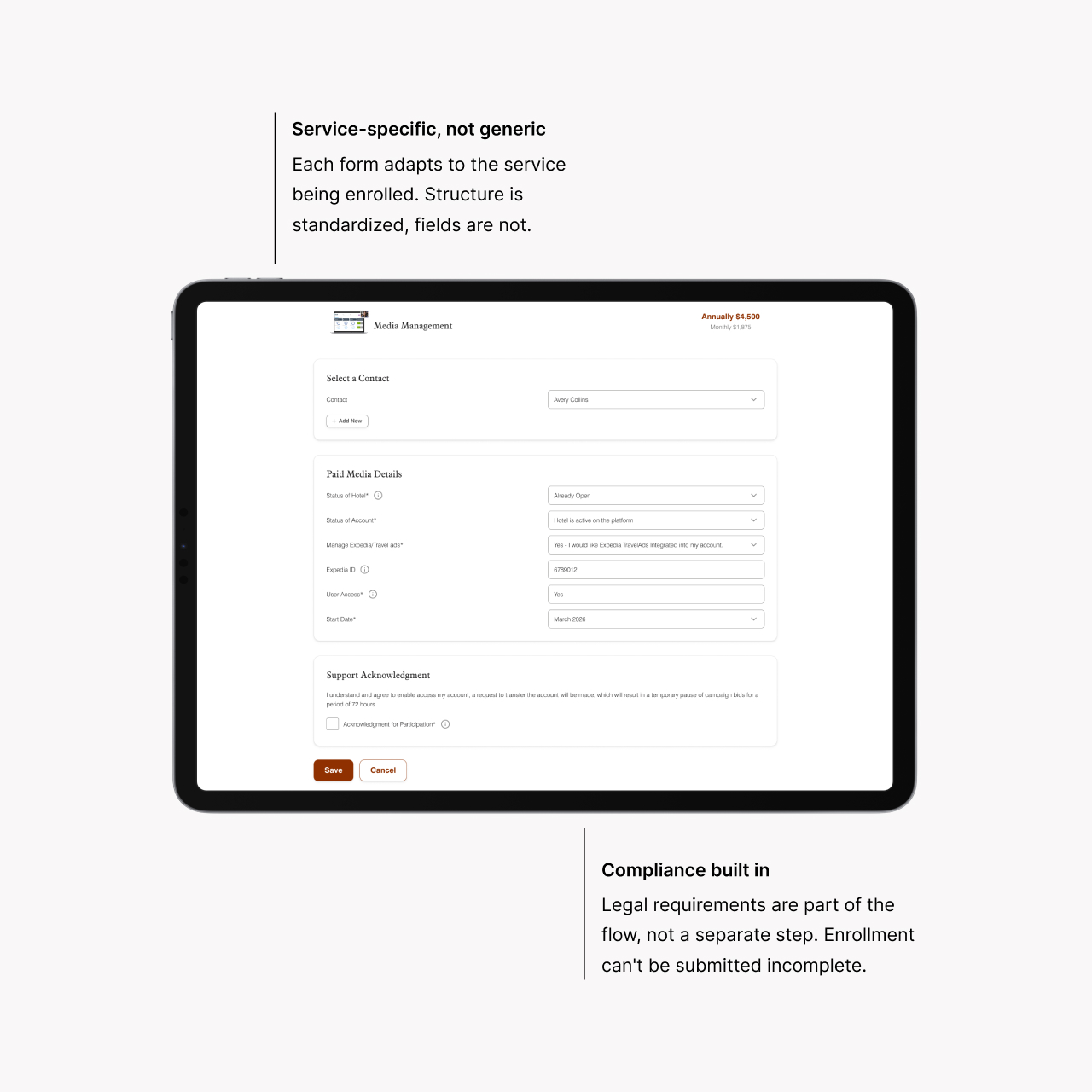
Rather than building custom flows for each department, I designed a standardized enrollment system with reusable patterns for intake, request handling, and escalation. This made automation possible. It also made reporting consistent across services for the first time , enabling SLA tracking and performance comparison that previously didn't exist.
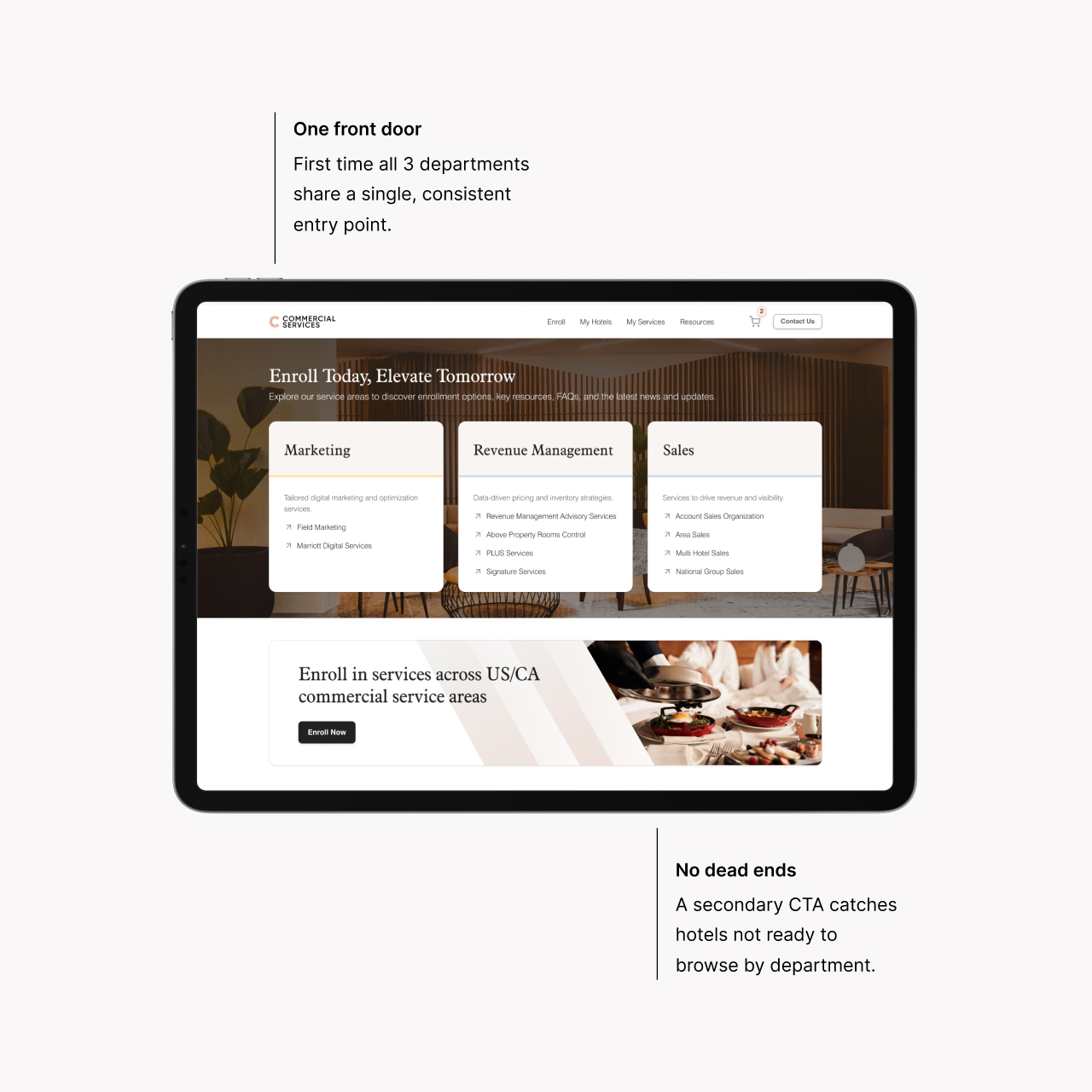
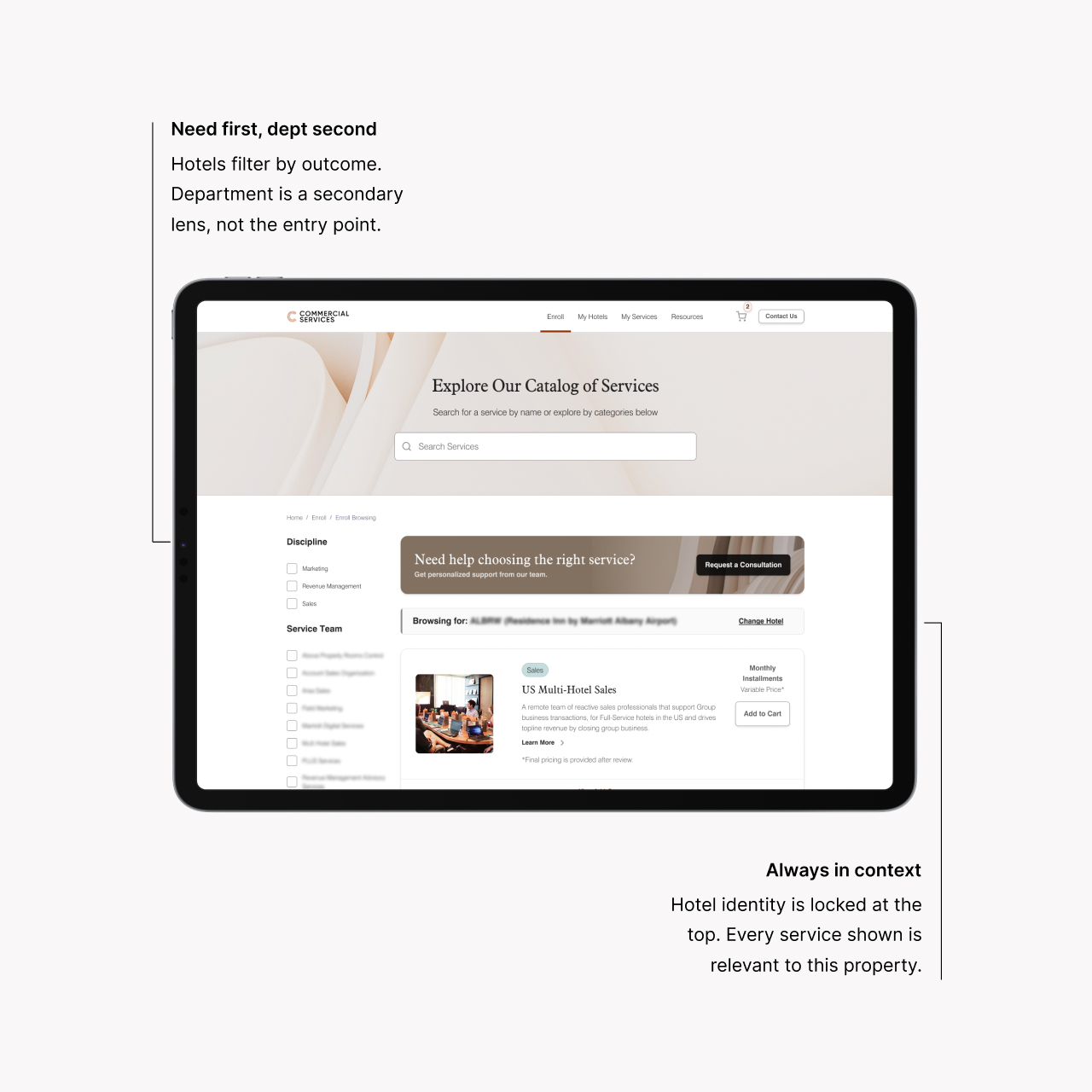
Departments retain control over their service catalogs, enhancement packages, resources, and reporting views. The platform sets the structure; departments operate within it on their own terms. This was a deliberate trade-off. Some custom processes had to be retired, but it's what kept adoption from stalling. Centralization without flexibility creates resistance. This model avoided that.
Service Discovery
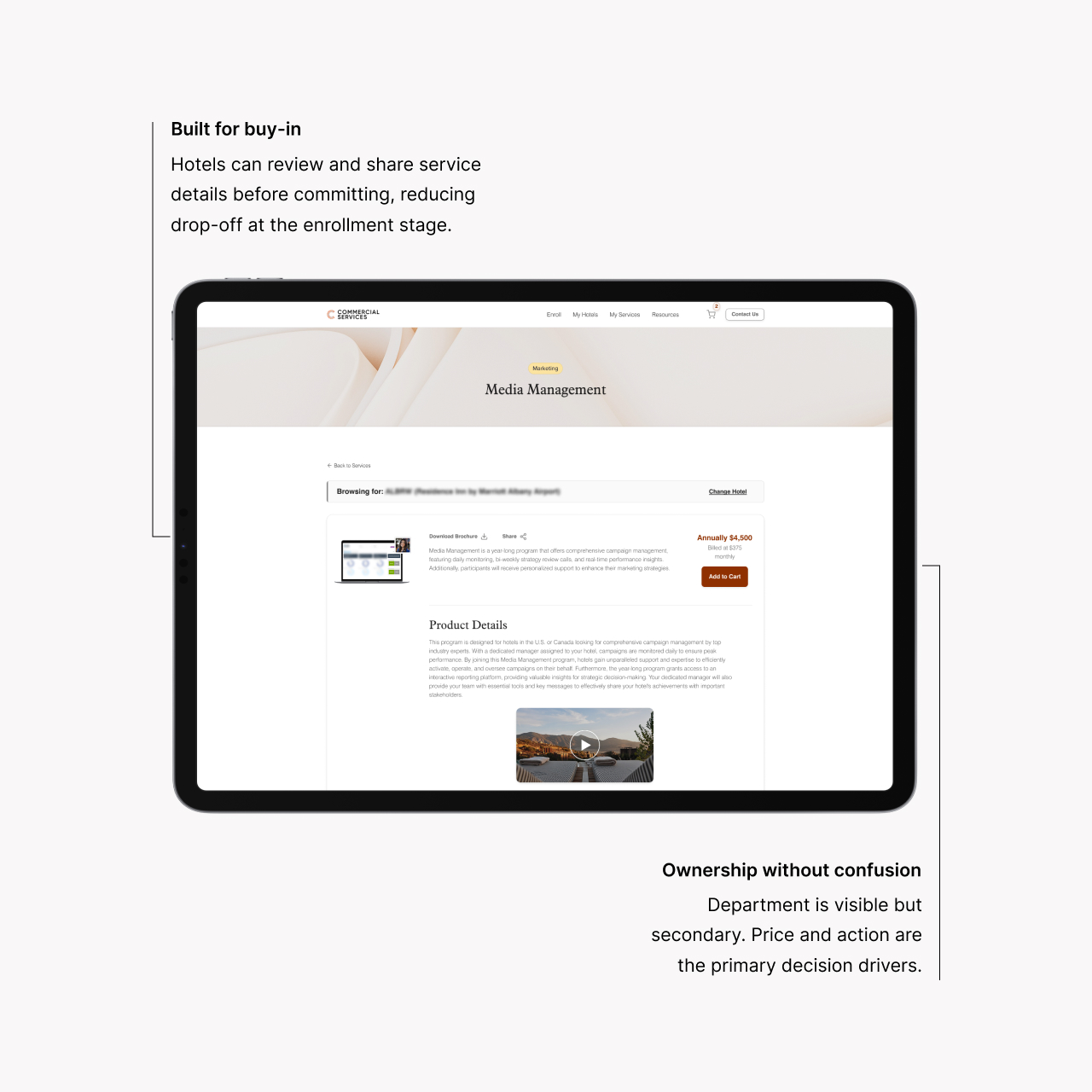
Hotels can find and evaluate available services without needing to know which department owns them. The catalog is centralized, searchable, and consistent.
Enrollment
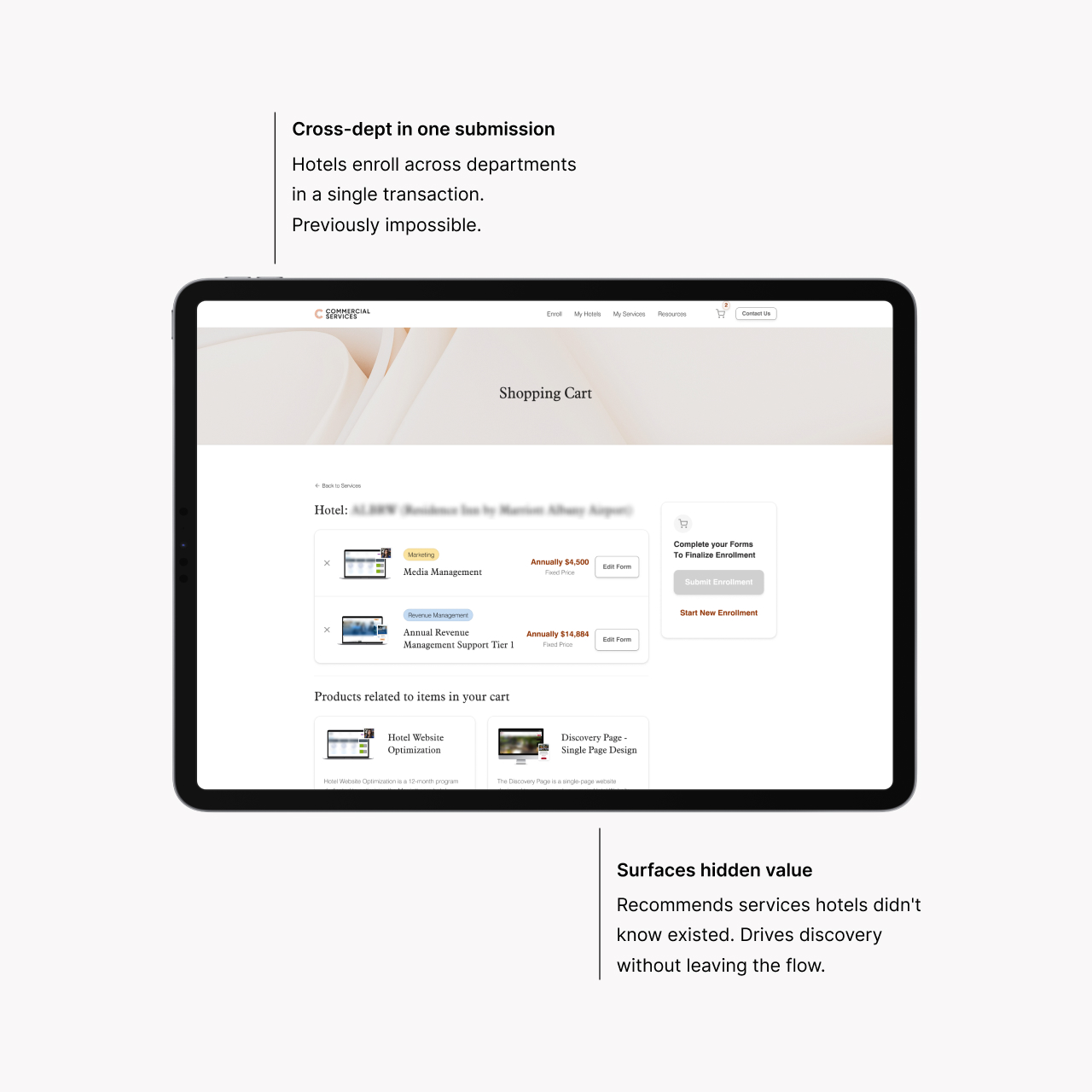
A structured intake model replaces manual back-and-forth. Hotels move through enrollment with clear steps, status visibility, and no ambiguity about what happens next.
Support & Request Routing
Requests are categorized and routed automatically. Response timelines are visible. Nothing falls into an inbox and disappears.
Insights & Reporting
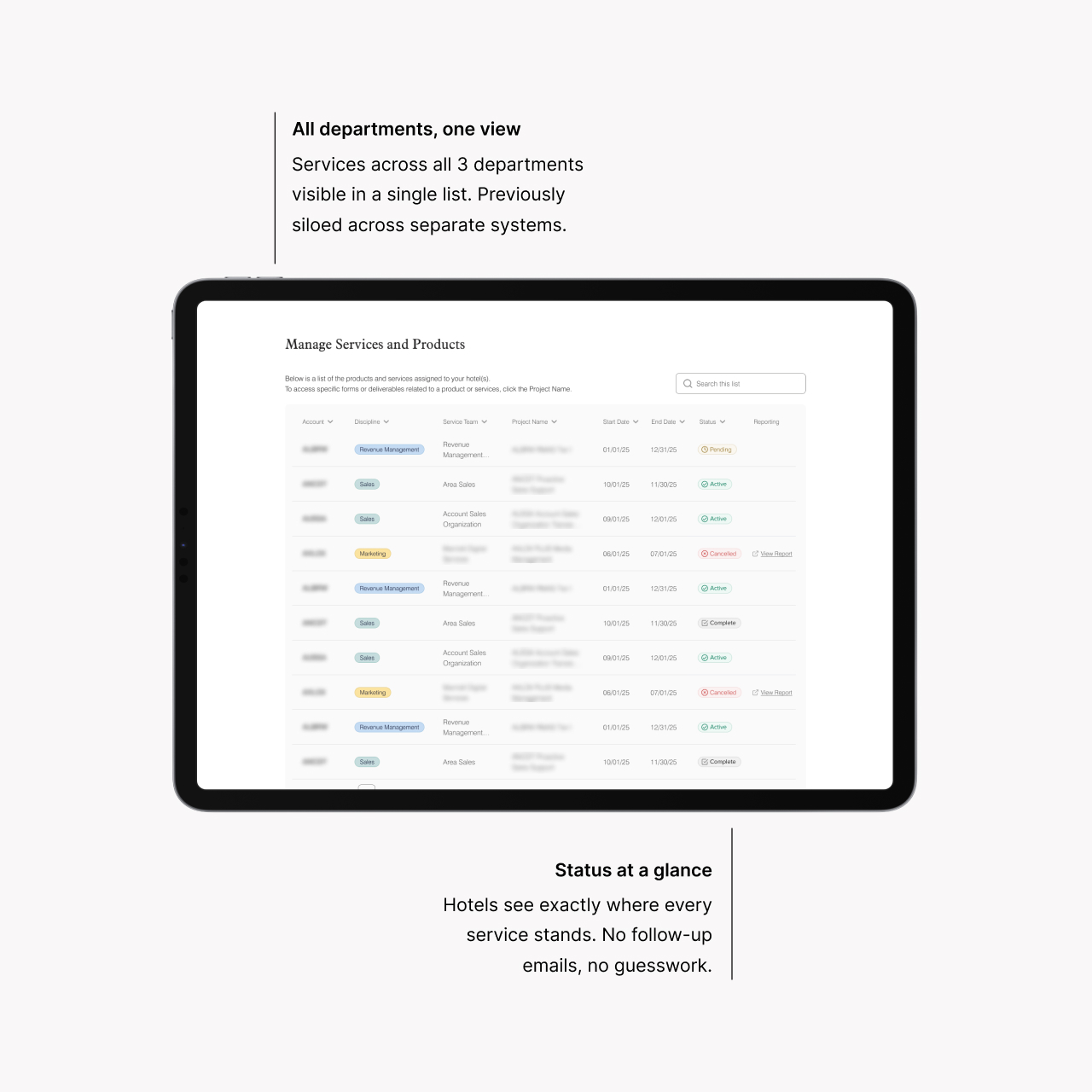
Departments and leadership see performance data in a consistent format. Adoption, usage, and SLA metrics are measurable for the first time across the entire ecosystem.
4,000+ hotels supported through one service model
Designed a centralized Commercial Services platform for U.S. and Canada hotels, replacing fragmented department-specific workflows with one shared model for service discovery, enrollment, execution, and reporting.
10 teams across 3 departments unified
Created a shared platform structure across Marketing, Sales, and Revenue Management teams without removing department-level ownership. Each team could manage its own services, workflows, and content while hotels experienced one consistent system.
1 scalable framework for global expansion
Built reusable service templates, enrollment patterns, reporting structures, and governance rules that allow new services and regions to be added without rebuilding the core platform.
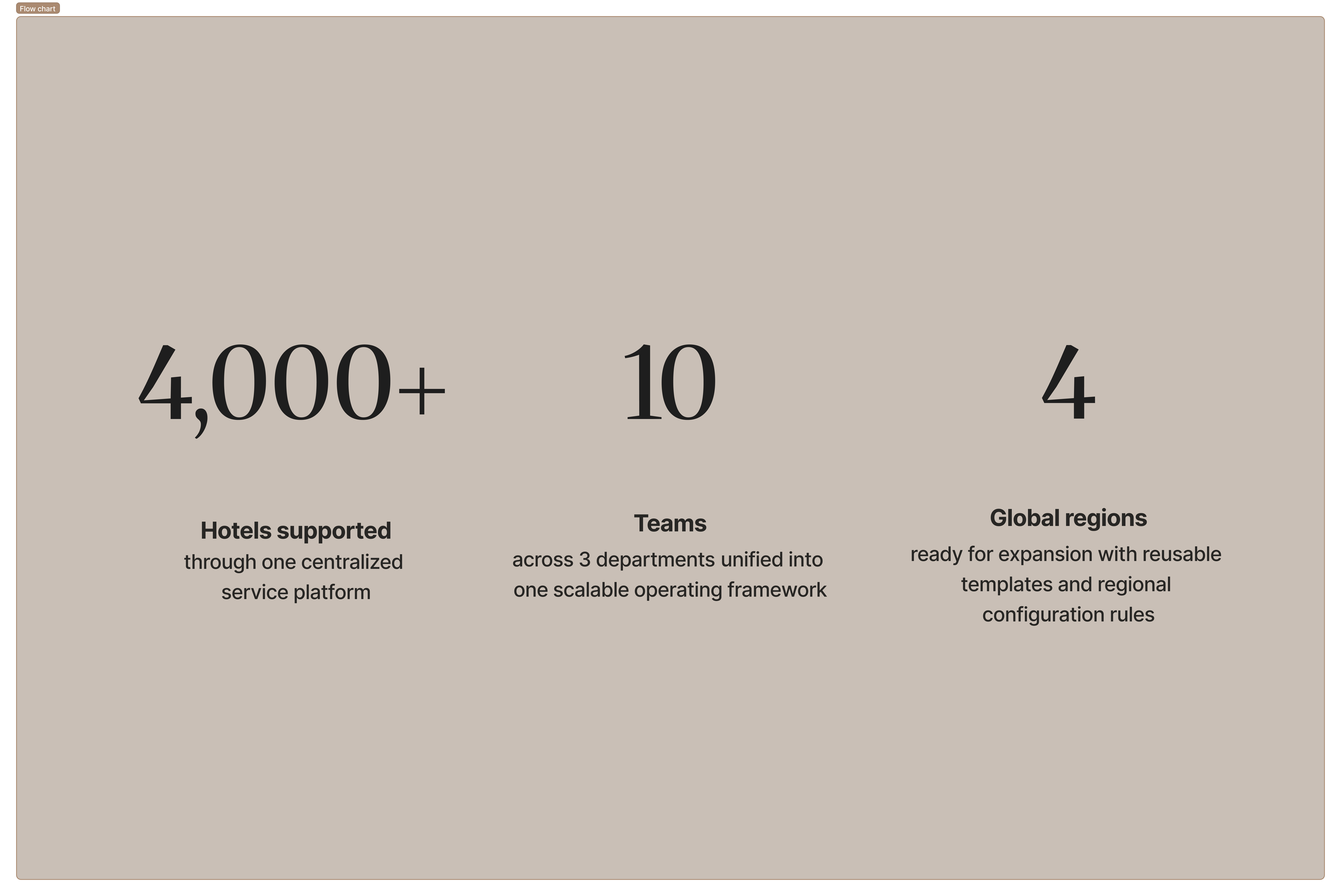
The platform turned Commercial Services from a fragmented, reactive process into a scalable service model for U.S. and Canada hotels.
Hotels gained a centralized place to discover, enroll in, and manage services. Internal teams gained a shared operating framework for intake, fulfillment, tracking, and reporting.
Built for expansion, the platform created a repeatable foundation that can scale across four additional global regions while supporting regional service differences.
The result was more than a better interface: it was the operating infrastructure for global Commercial Services growth.
